
Last updated November 16, 2026
 AC repair
 Furnace & heating
 Heat pumps
 Ductless mini splits
 Carrier
 Trane
 Goodman
Seasonal tune-up and full diagnostic on your Carrier, Trane, or Goodman system - readings shown to you before any repair is proposed
Diagnosis first, numbers second - you approve the repair price before a single part goes in.
Get your free estimateHVAC Warning Signs: An El Monte Homeowner’s Reference Guide
Most HVAC troubleshooting guides stop at the same five symptoms: strange noise, weak airflow, weird smell, high bill, won’t turn on. If you’ve read one, you’ve read them all, and none of them tell you what a specific pattern actually means for your specific equipment. That’s the gap this guide fills. We work on nine major HVAC brands, and we’ve learned that the failure patterns differ by manufacturer and by the conditions a system runs in. In El Monte, those conditions are warm, dry summers and mild winters that let heating problems hide for months. This guide covers the signals most homeowners dismiss as normal and what each one tends to indicate. AC Repair El Monte is a multi-brand HVAC specialist, and the patterns below come from what we see on actual equipment.
Quick Answer
The most important HVAC warning signs in El Monte are short-cycling at regular intervals, energy bills that climb while runtime stays flat, delayed ignition or a yellow pilot flame at the furnace, and error codes on the thermostat that repeat. Short-cycling suggests an oversized unit or a refrigerant charge problem. Rising bills with normal runtime usually point to duct leakage. A yellow pilot flame or delayed ignition is a combustion safety issue and warrants a same-day call. Our technicians have up to 15 years of experience identifying these patterns on Carrier, Trane, Lennox, Goodman, Rheem, York, Daikin, Bryant, and American Standard equipment, so the diagnosis is specific to your brand rather than generic.
Styles & brands we work with
- AC repair
- Furnace & heating
- Heat pumps
- Ductless mini splits
- Carrier
- Trane
- Goodman
Table of Contents
- Short-Cycling: Oversized Unit or Refrigerant Loss?
- Reading Brand-Specific Error Codes on Your Thermostat
- Why High Summer Bills Often Mean Duct Leakage
- Furnace Warning Signs El Monte Homeowners Miss
- Warning Sign to Failure: How Much Time Do You Have?
- Cooling-Specific Signals Worth Acting On
- When Warning Signs Point to Replacement, Not Repair
Short-Cycling: Oversized Unit or Refrigerant Loss?
A system that starts and stops every eight to ten minutes in El Monte’s summer heat isn’t “working hard.” It’s short-cycling, and it’s one of the clearest warning signs a homeowner can watch for. The critical insight most guides miss: two very different problems produce the same visible symptom, and mixing them up leads to the wrong repair.
Oversizing means the equipment has more capacity than the home needs. The unit cools the space so fast that it hits the thermostat setpoint before it has run long enough to pull moisture out of the air, then shuts off. Fifteen minutes later the temperature has crept back up and it starts again. The house feels cold but clammy, and the runtime stays short.
Refrigerant loss looks similar from the outside but behaves differently. The system still runs a full cycle length, but it can’t reach the setpoint, so it fires up again almost immediately. You’ll often see frost or condensation on the indoor coil or the larger copper line, and the air coming from the vents is cooler than room temperature but not as cold as it used to be.
Here’s how to tell them apart in plain terms:
- Oversized: Short runtimes, reaches setpoint fast, feels humid indoors, usually present since the system was installed.
- Refrigerant loss: Long runtimes, struggles to reach setpoint, cool but not cold air, often appears gradually over one or two seasons.
- Restricted airflow (a third cause): Short runtimes, weak airflow at the vents, most often a clogged filter or a collapsed flex duct in the attic.
Because the symptoms overlap, a proper diagnosis starts with static pressure and superheat readings, not a guess. We carry equipment for all nine major HVAC brands so we read the pressures against that manufacturer’s spec, not a generic chart. If your system short-cycles in El Monte, one call to (833) 943-2930 gets a trained technician out to confirm which of the three it is. Estimates are free.
Reading Brand-Specific Error Codes on Your Thermostat
Modern thermostats and control boards throw fault codes that mean something specific to the manufacturer. A homeowner who can read the display has a real advantage, because the code narrows the diagnosis before anyone opens the panel. Here’s what typical codes point toward across the brands we work on. These are general patterns, not exact code lists, so always check your owner’s manual for the code your system shows.
Goodman and Amana-family equipment often display a two-digit fault code with a legend printed on the control board door. A code pointing to “pressure switch” or “limit” usually means a draft issue or a blocked flue. A code pointing to “flame sensed without call” is a safety stop. Shut the system off and call.
Rheem and Ruud systems frequently use a blinking LED pattern. Seven blinks on many Rheem furnace boards means the flame rollout switch has tripped, which is a combustion-safety signal. Four blinks often means a high-limit trip, usually from restricted airflow.
York and Coleman equipment often shows numeric codes on their communicating thermostats. Codes in the E1 to E4 range tend to be sensor and communication faults, while codes related to “lockout” indicate the system tried to start three times and gave up.
Daikin and their FIT and inverter systems use letter-number combos (like “U4” or “A5”) that map to specific communication or indoor-unit faults. Daikin’s diagnostics are more detailed than most, but they require the correct manual to interpret.
When you see a code, do these things in order:
- Write the code down exactly, including any blinking pattern and how many blinks in a sequence.
- Note what the system was doing when the code appeared (starting, running, or during a heating cycle).
- Check the air filter. Some “limit” and “high head pressure” codes are just a dirty filter.
- If the code returns after a filter change, don’t reset it again. Call for diagnosis.
This is where brand familiarity matters. A technician who reads Carrier codes every week and Daikin codes every week is not guessing. You can read more about our furnace repair work, which covers the code-reading side of both gas and electric heat.
Why High Summer Bills Often Mean Duct Leakage
Here’s a fact that surprises most homeowners: a summer energy bill that climbs 20 to 40 percent while your runtime hours stay flat usually isn’t an equipment problem at all. It’s air leaking out of the ducts before it reaches the room. The system runs the same number of hours but works harder to deliver the same comfort, and you pay for the difference.
Duct leakage is common in El Monte’s older single-story housing stock, where flexible duct in the attic has had decades to sag, tear at joints, or pull loose from a register boot. Attic temperatures in El Monte summers run hot enough that a small leak costs real money month after month. If your bill has gone up but the system “seems fine,” the ducts are where we look first.
A basic pressure test a homeowner can do:
- Close all windows and exterior doors. Turn off the HVAC completely.
- Turn on every bath fan and kitchen exhaust fan in the house.
- Hold a tissue or a piece of toilet paper against each supply register. If the tissue flutters or is pulled toward the register, the duct is likely leaking nearby or the system is losing pressure in the attic.
- Walk the attic and look for disconnected flex duct, crushed sections, or tape that has dried out and fallen off. Don’t crawl far; just look from a safe standing point.
If the tissue test shows anything suspicious, a duct-leak diagnosis is worth the call. We don’t clean ducts, but we do measure airflow and static pressure and can tell you whether the leak is on the supply side, the return side, or both. That measurement is what turns a “high bill” complaint into a fix. Call (833) 943-2930 for a free estimate if you want an airflow and pressure assessment.
Furnace Warning Signs El Monte Homeowners Miss
Heating season in El Monte is short. That’s exactly why furnace problems slip past homeowners year after year. A furnace that runs three or four weeks a year gets no practice at being noticed, so the subtle sounds and colors that a cold-climate homeowner would catch in November go unremarked here until the furnace won’t light at all.
Delayed ignition. When you turn up the thermostat, the burners should light within a few seconds of the inducer fan starting. A “whump” sound, a small puff, or a two- to ten-second delay means gas is building up before ignition. That’s a combustion-safety signal and a real fire risk. Don’t run the furnace and call for service. furnace repair covers this specific issue well because it’s a common pattern in El Monte’s short heating season.
Yellow or lazy pilot flame. A healthy natural gas flame is blue with a small inner cone. A yellow, orange, or floating flame means incomplete combustion, and it’s usually a dirty burner, a misadjusted air shutter, or a blocked flue. Incomplete combustion produces carbon monoxide, so this is not a “wait and see” sign.
Heat exchanger red flags. The heat exchanger is the metal boundary between the burner flame and your indoor air. When it cracks, combustion gas enters the airstream. Signs to watch for: a sulfur or “rotten egg” smell when the heat runs, a persistent headache or fatigue in the household on heat-on days, soot streaks near the furnace, or a flame that lifts and rolls out of the burner box when the blower starts. Any of these means shut it off and call.
Like AC repair, the brand question matters for furnaces too, and Rheem’s and Goodman’s furnaces each have their own ignition sequence and limit-switch layout. Call (833) 943-2930 for furnace diagnosis. We answer 24/7 and dispatch 7am to 7pm, Sunday through Friday.
Warning Sign to Failure: How Much Time Do You Have?
Not every warning sign is urgent. Some buy you weeks; others are a same-day call. Here’s how we classify them for a typical El Monte home so you can plan accordingly.
Same-day calls (safety or active failure):
- Yellow or floating pilot flame. Shut off and call.
- Delayed ignition with a “whump.” Shut off and call.
- Burning or electrical smell from the indoor unit.
- Frost on the evaporator coil or suction line. The system is running without enough refrigerant and can damage the compressor if left on.
- Furnace running but cold air coming from the registers. Possible flame not lighting, blower not running, or a limit trip.
Within a week or two (efficiency loss with real risk):
- Short-cycling with no frost. Book a diagnosis; it isn’t a fire hazard yet, but it accelerates wear on the compressor and blower motor.
- Duct leakage that you already know about. Book a pressure test.
- Repeated thermostat error codes on non-safety faults (communication, sensor).
Within a season (gradual wear):
- Rising energy bills with normal runtime and no codes. Duct or coil degradation.
- Water pooling near the indoor unit. Likely a clogged condensate drain that will eventually overflow.
- Rattling or humming from the outdoor unit that only happens at startup. Loose mounting or a failing capacitor.
- Weak airflow from a single vent. Duct issue specific to that run.
Timelines vary by how the equipment was originally sized and how well it’s been maintained. Systems installed with a proper load calculation on a right-sized unit tend to run longer between surprises. If your equipment is new enough that you should have years left, our AC installation page covers what a properly sized system looks like in an El Monte home.
Cooling-Specific Signals Worth Acting On
Cooling problems in El Monte have a season. From June through September, outdoor units run long cycles in afternoon heat, and specific wear patterns show up faster here than they would in a cooler climate. These are the cooling signs we see matter most.
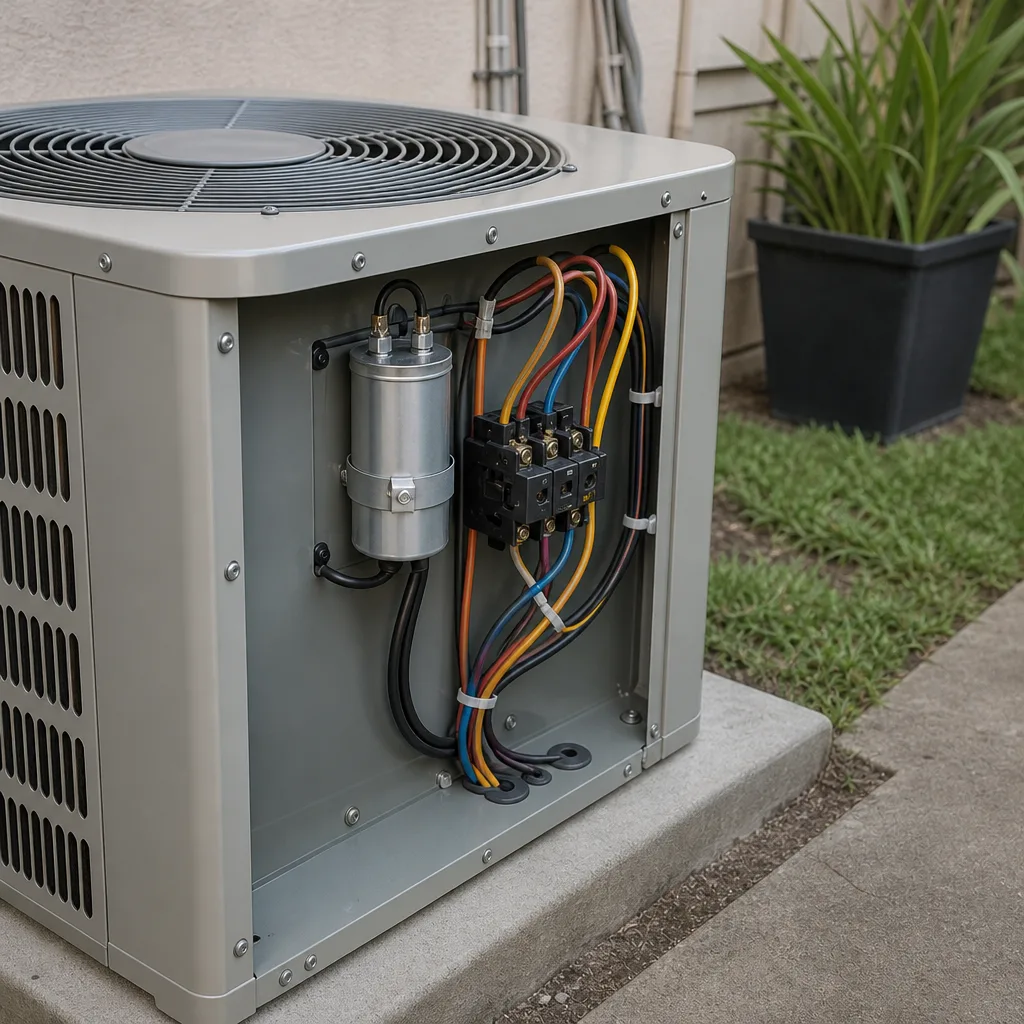
Outdoor fan running but not blowing hot air. The fan spins, the compressor is quiet, and the air from the unit is the same temperature as the air going in. This usually means the compressor isn’t running due to a capacitor failure, a tripped internal overload, or low refrigerant. Don’t leave it running. The electrical draw is still happening with no cooling benefit, and a failed capacitor can damage the compressor if the contactor chatters.
Indoor coil icing. Frost or a sheet of ice on the indoor coil usually means low refrigerant, a restricted filter, or a failing blower motor. Turn the system off at the thermostat and let the ice melt before anyone looks at it. Running with the coil iced will not diagnose or fix anything.
Loud compressor start-up. A compressor that clunks or hums loudly on every start is usually a weak capacitor or a hard-start issue. Address it early; a burnt compressor is far more expensive than the capacitor that failed.
Condensate line overflowing. In El Monte’s summer humidity, the indoor coil produces a lot of condensation. If the drain line is clogged, water backs up and can short a control board or stain the ceiling below an attic install. The sign is a slow drip or a wet spot that appears every afternoon.
Brand-specific notes here matter too. Goodman’s contactors and capacitors are common failure points we check first; Daikin’s inverter-driven compressors need their own meter and startup procedure; York outdoor units sometimes have a low-pressure lockout that triggers without a fault code. AC Repair El Monte covers these brands without the learning curve.
When Warning Signs Point to Replacement, Not Repair
Some patterns mean a repair keeps the system alive another season. Others mean repairs are just money spent on a system at the end of its useful life. Here’s how we draw the line in El Monte.
Repair usually wins when:
- The system is under roughly ten years old and the failure is a single component (capacitor, contactor, blower motor, ignitor).
- The unit was properly sized at install, and this is the first major problem.
- Refrigerant loss traces to a single accessible leak at a fitting.
Replacement usually wins when:
- The system is fifteen years or older and this is its second or third major repair.
- Refrigerant loss is happening inside the indoor coil, which is not worth repairing when it’s more than a decade old.
- The heat exchanger is cracked or corroded. That’s not a repair, it’s a safety stop.
- The system was undersized or oversized at original install. Repeated short-cycling on a badly sized system is a design problem, not a maintenance one.
Replacement isn’t a same-day event. A right-sized replacement starts with a load calculation for the specific home, not a rule-of-thumb number off the old unit. The equipment is ordered, delivery is scheduled, and installation happens on a set date. What you get up front is a written fixed price, and the paperwork for any applicable rebate or financing handled alongside the install. That’s the difference between a right-sized replacement and a swap.
Common Mistakes to Avoid
- Resetting the system every time the code appears. Clearing the code hides the pattern that would have explained the problem. Write codes down; don’t clear them in the hope the problem goes away.
- Assuming high bills mean a bad compressor. In El Monte, a summer bill that climbs 20 to 40 percent with no change in runtime is often duct leakage, and a compressor swap doesn’t fix a duct leak. Measure airflow before replacing equipment.
- Running the AC with a frozen coil. Turning the system off and letting the ice melt is the right move. Running it with a frozen coil will not clear the condition and can damage the compressor.
- Ignoring delayed ignition because “it eventually lights.” A furnace that lights a few seconds late is gas building up before ignition. This is a combustion-safety issue, not a nuisance.
- Letting a general handyman touch heating equipment. Combustion, gas piping, and control board diagnostics are not general-repair work. A specialized HVAC technician reads the flame color, watches the ignition sequence, and checks the heat exchanger before declaring the furnace “fine.”
- Buying a replacement sized off the old unit’s nameplate. The old unit may have been the wrong size from day one. A right-sized replacement starts with a fresh load calculation, not a copy of the old tag.
- Choosing a contractor by single-brand lock-in. If a contractor only works on one brand, they may recommend that brand regardless of your home. Brand-agnostic expertise means the recommendation fits the home, not the vendor relationship.
See the difference
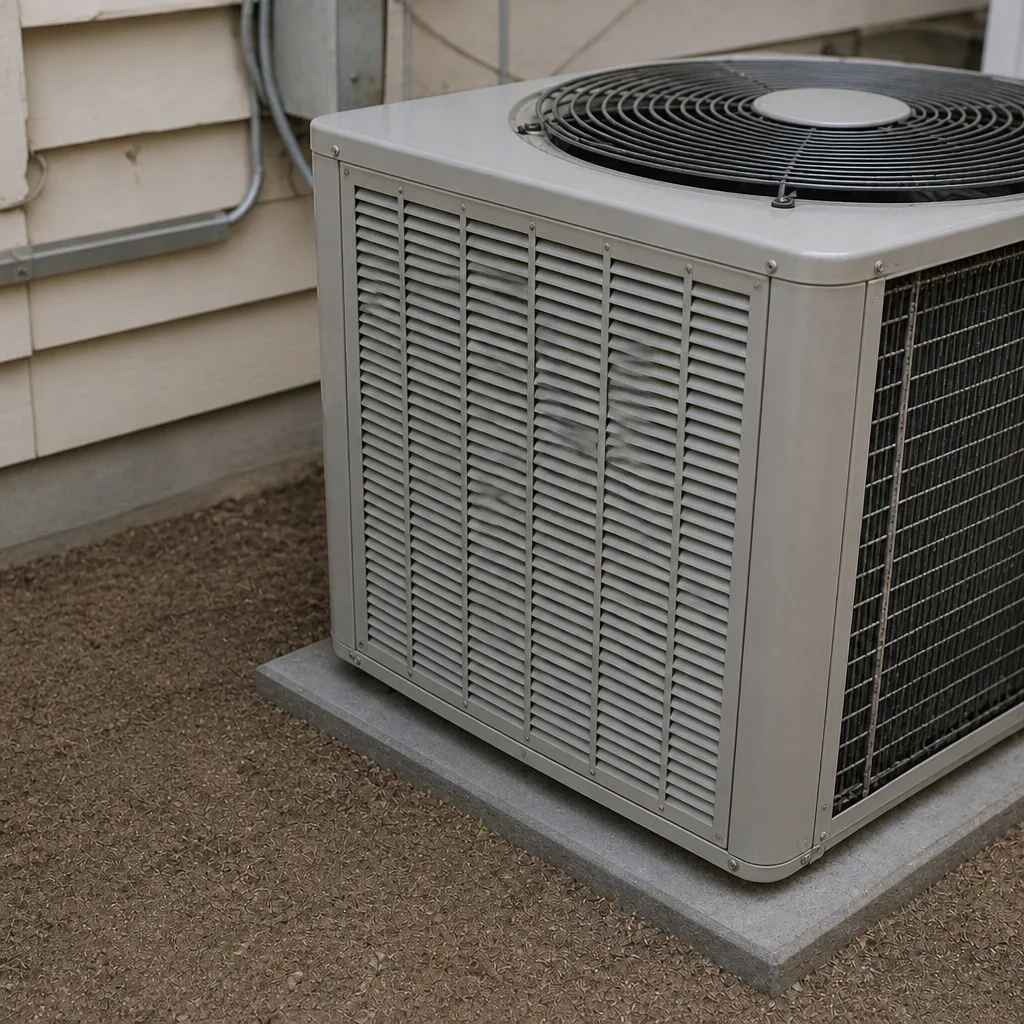
 Before
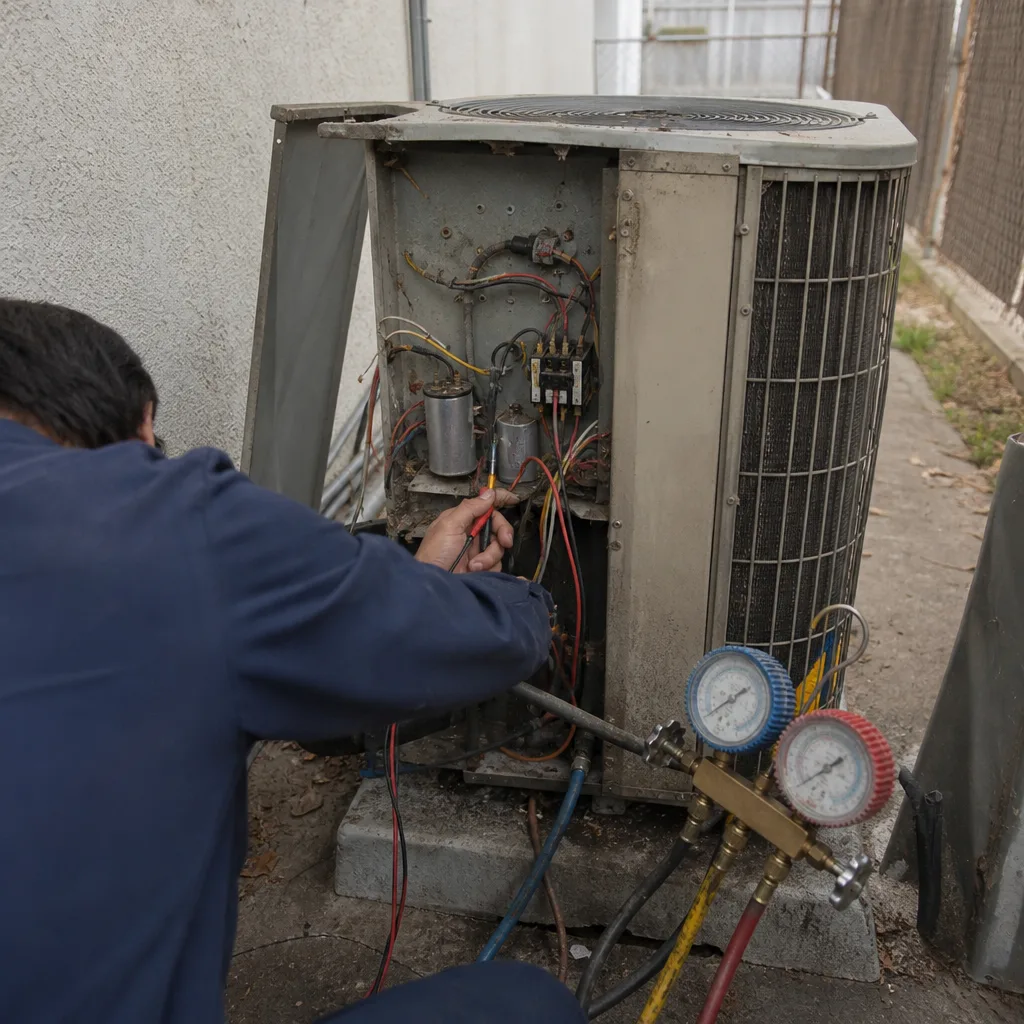
 After
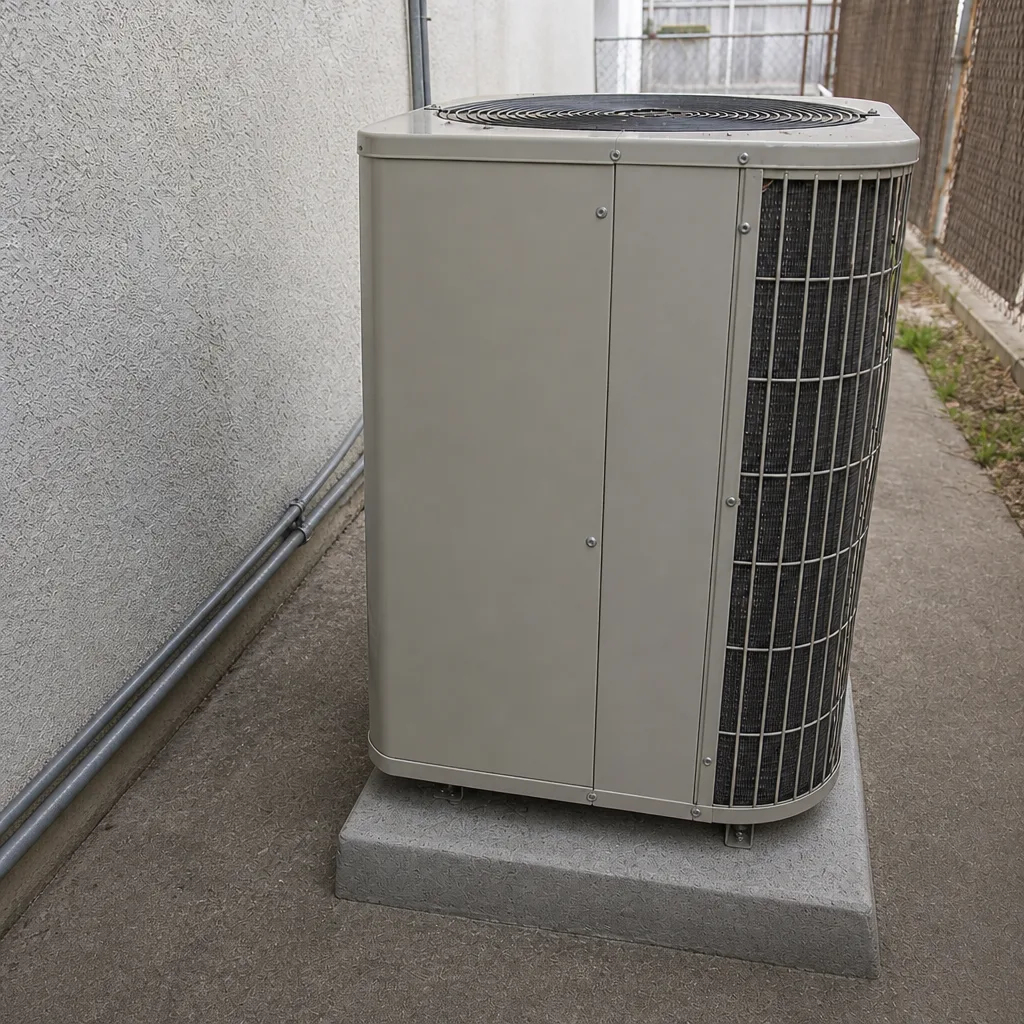
 Before
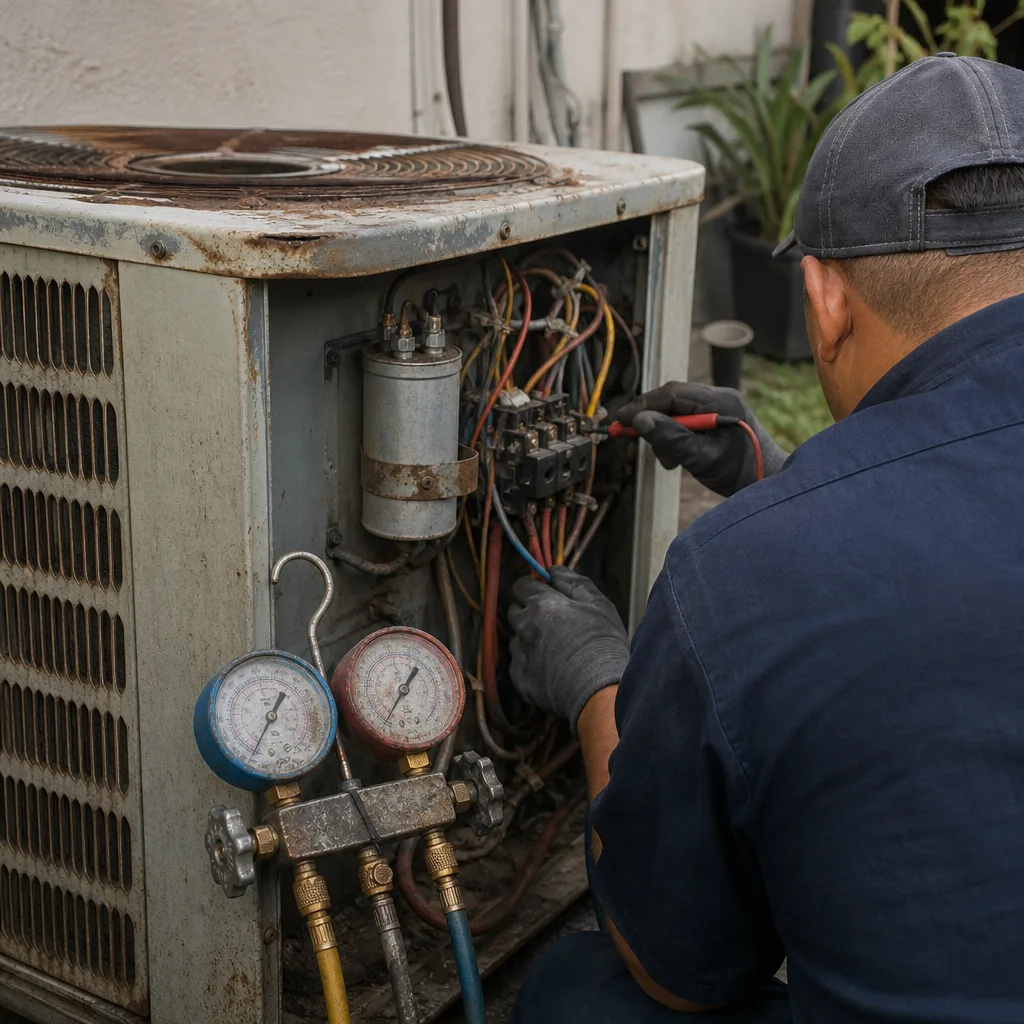
 After
 Before
 After
When to Call a Professional
Call right away for a yellow pilot flame, delayed ignition, a cracked heat exchanger, a burning smell, or a system that’s already failed. Call same-day when you see frost on the indoor coil, water pooling around the indoor unit, or repeated error codes that come back after a filter change. Call within a week for short-cycling, a bill that has jumped with no change in runtime, or outdoor unit noise that only happens at startup. Avoid tackling gas, electrical, or refrigerant work yourself. The refrigerant side is regulated, combustion cannot be diagnosed by sound alone, and a wrong diagnosis on a compressor is expensive. AC Repair El Monte offers free estimates in El Monte – call (833) 943-2930. We answer 24/7. Fast dispatch from 7am to 7pm, Sunday through Friday. Our technicians have up to 15 years of experience and work on Carrier, Trane, Lennox, Goodman, Rheem, York, Daikin, Bryant, and American Standard equipment every week.
Frequently Asked Questions
Short-cycling at regular intervals is the most useful early warning sign, because it points to three different problems that have very different fixes. If your system is starting and stopping every eight to ten minutes in summer, it’s either oversized, low on refrigerant, or restricted in airflow. A technician can tell the three apart in one visit. Call (833) 943-2930 for a free estimate; diagnosing which one you have before guessing at repairs saves money.
Not always. A bill that climbs 20 to 40 percent while your runtime hours stay flat usually points to duct leakage rather than the AC equipment itself. The system runs the same number of hours but works harder to deliver the same cooling. A basic tissue test at the registers plus a pressure reading in the attic will confirm it. Call (833) 943-2930 for an airflow and pressure assessment; the estimate is free.
A yellow or floating pilot flame means incomplete combustion, and it’s usually caused by a dirty burner, a misadjusted air shutter, or a blocked flue. A healthy natural gas flame should be blue with a small inner cone. Incomplete combustion produces carbon monoxide, so shut off the furnace and call. Turn off the gas supply, open windows if you smell gas, and call (833) 943-2930 for a same-day diagnostic. We answer 24/7 and dispatch 7am to 7pm, Sunday through Friday.
Write the code down exactly and don’t reset it. Clear the screen shows the pattern, and resetting it hides the pattern a technician needs to see. On many brands a repeat code (the same code twice in a few days after a filter change) means the issue is not going to resolve on its own. Our El Monte service team reads codes for Goodman, Rheem, York, Daikin, and the other five major brands; call (833) 943-2930 for a proper diagnosis.
It depends on the cause and the equipment age. If the system was oversized at install, repairs won’t fix the design problem, and replacement is the right answer. If it’s a single refrigerant leak at an accessible fitting on a unit under ten years old, repair usually wins. A load calculation on your actual home, not a guess from the old nameplate, is what tells you which side of the line you’re on. Call (833) 943-2930 for a free estimate.
Safety signs (yellow flame, delayed ignition, cracked heat exchanger, burning smell) are same-day. Cooling signs (frost on the coil, water pooling, repeated fault codes) are same-day to within a week. Efficiency signs (bill climbing with normal runtime, short-cycling without frost, single-vent weak airflow) can wait a week or two without risk. When you’re unsure which bucket you’re in, call (833) 943-2930 and describe what you’re seeing; we answer 24/7 and can tell you whether it’s a call-now situation or a scheduled visit.
The Bottom Line
The warning signs that matter most are the ones that look normal. Short-cycling isn’t “working hard.” A bill that climbs while runtime stays flat isn’t a bad compressor. A furnace that lights late isn’t quirky. These four patterns cover most of what goes wrong in an El Monte home, and reading them early turns an expensive emergency into a scheduled fix. The other half of the equation is knowing your equipment. Nine brands have nine diagnostic languages, and no-guesswork diagnosis comes from a technician who reads your brand every week, not a single-brand shop. If a warning sign on this guide matches what you’re seeing in your home, call (833) 943-2930 for a free estimate. We answer 24/7. Fast dispatch from 7am to 7pm, Sunday through Friday.
Written by the team at AC Repair El Monte.