
Last updated November 16, 2026
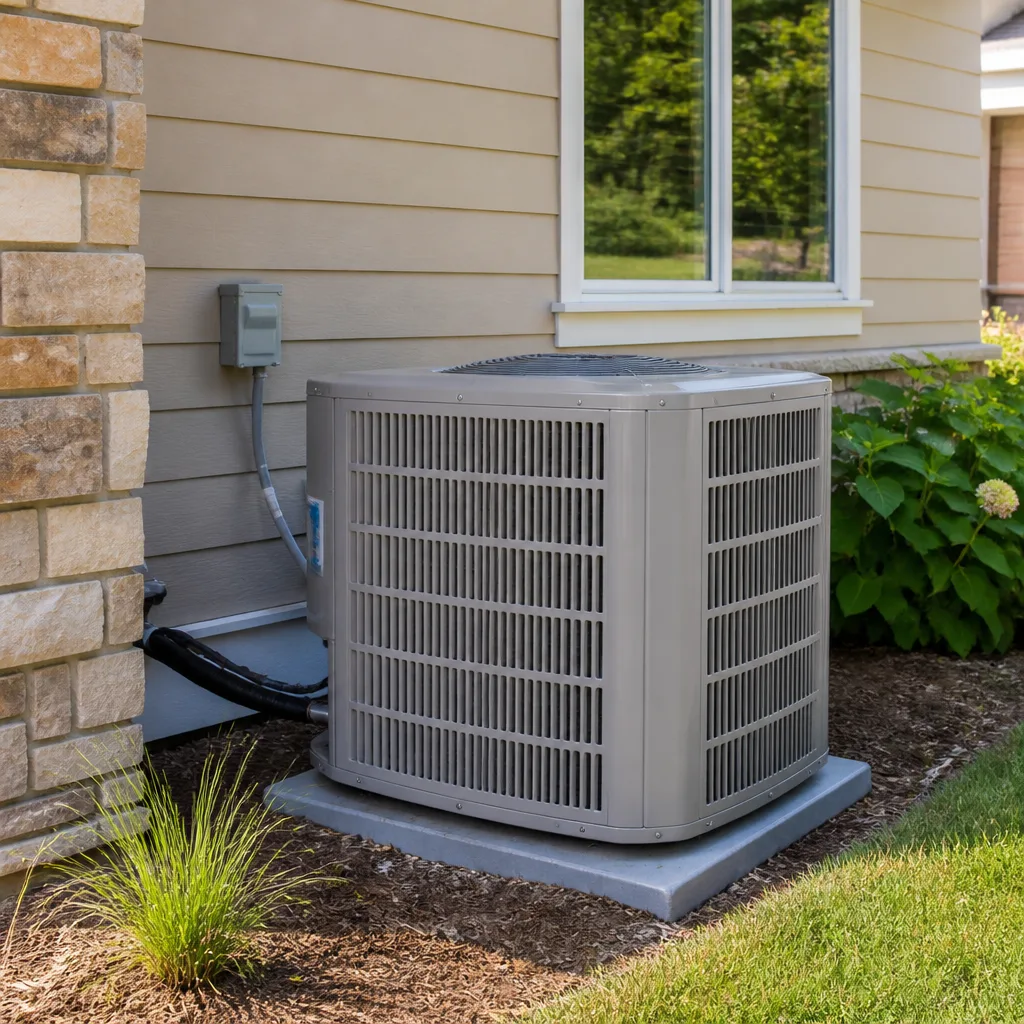 AC repair
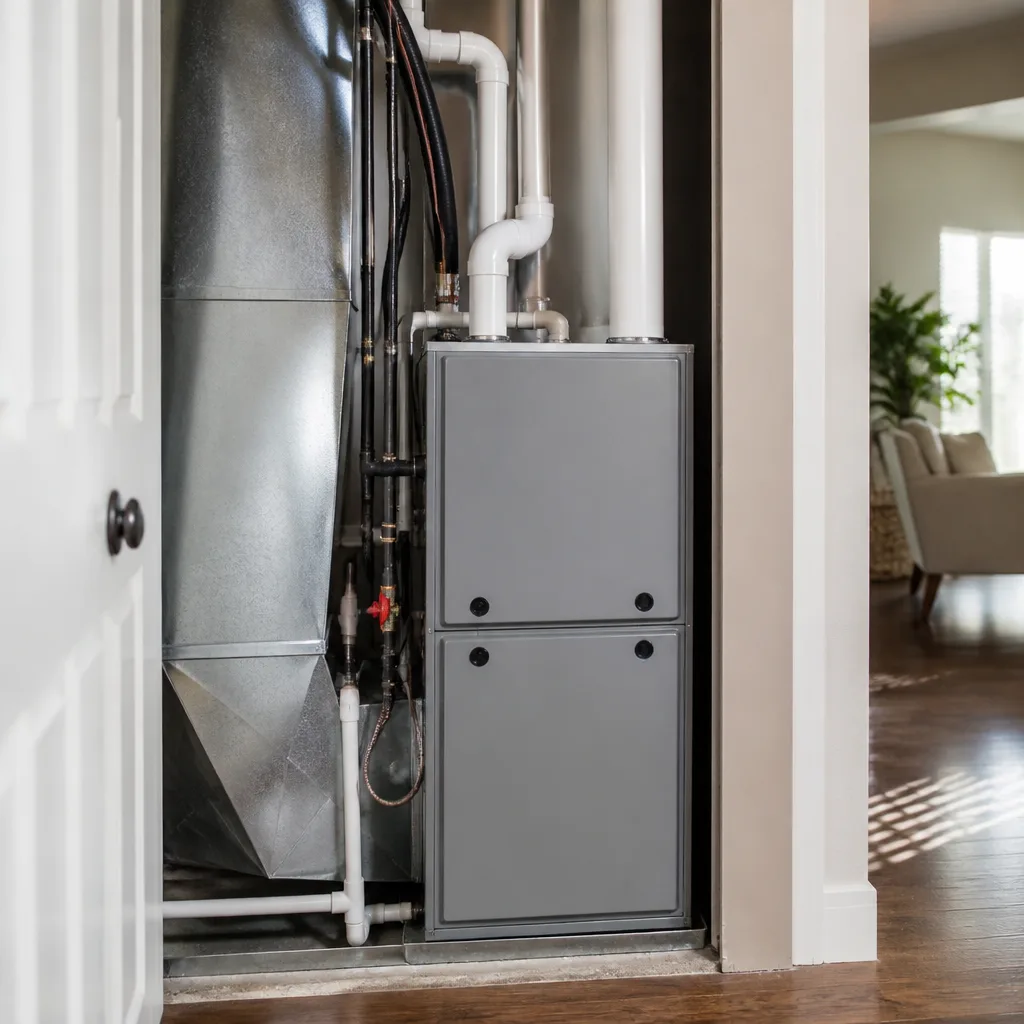 Furnace & heating
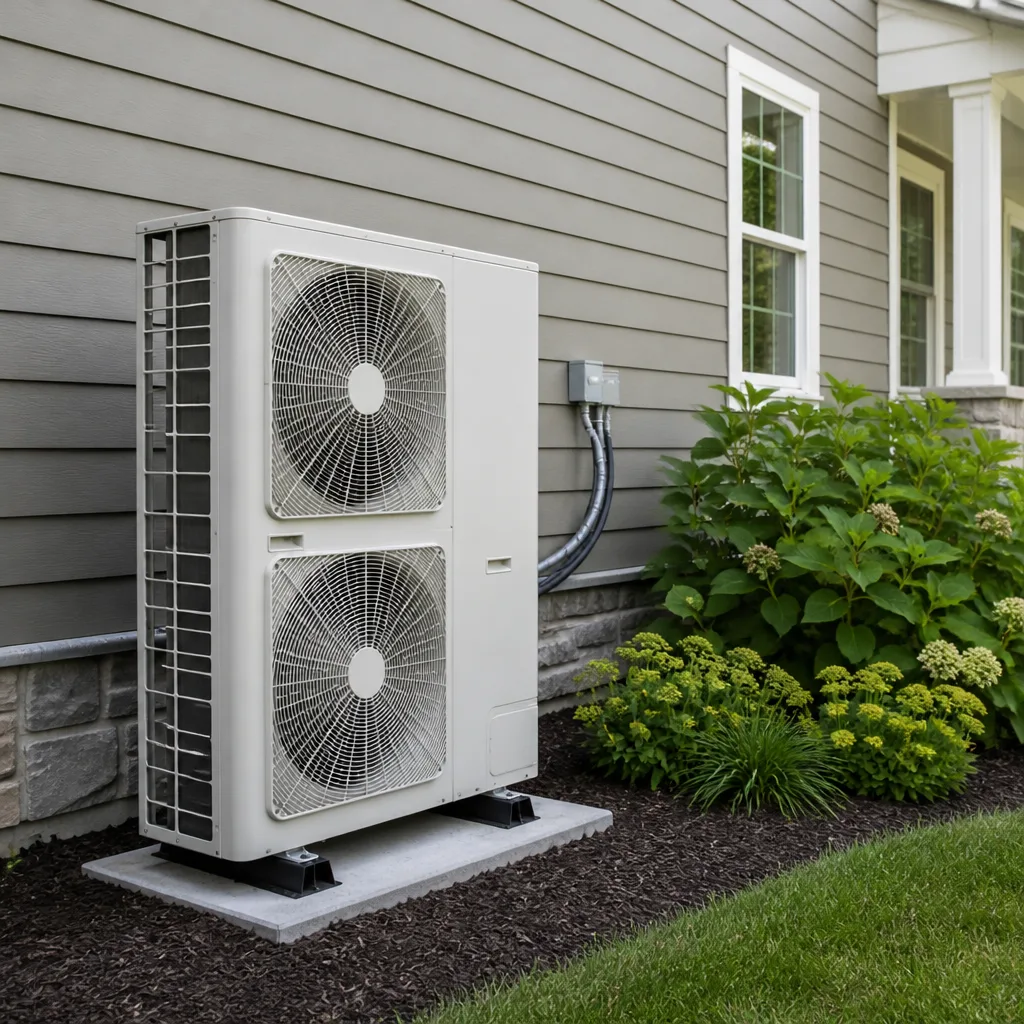 Heat pumps
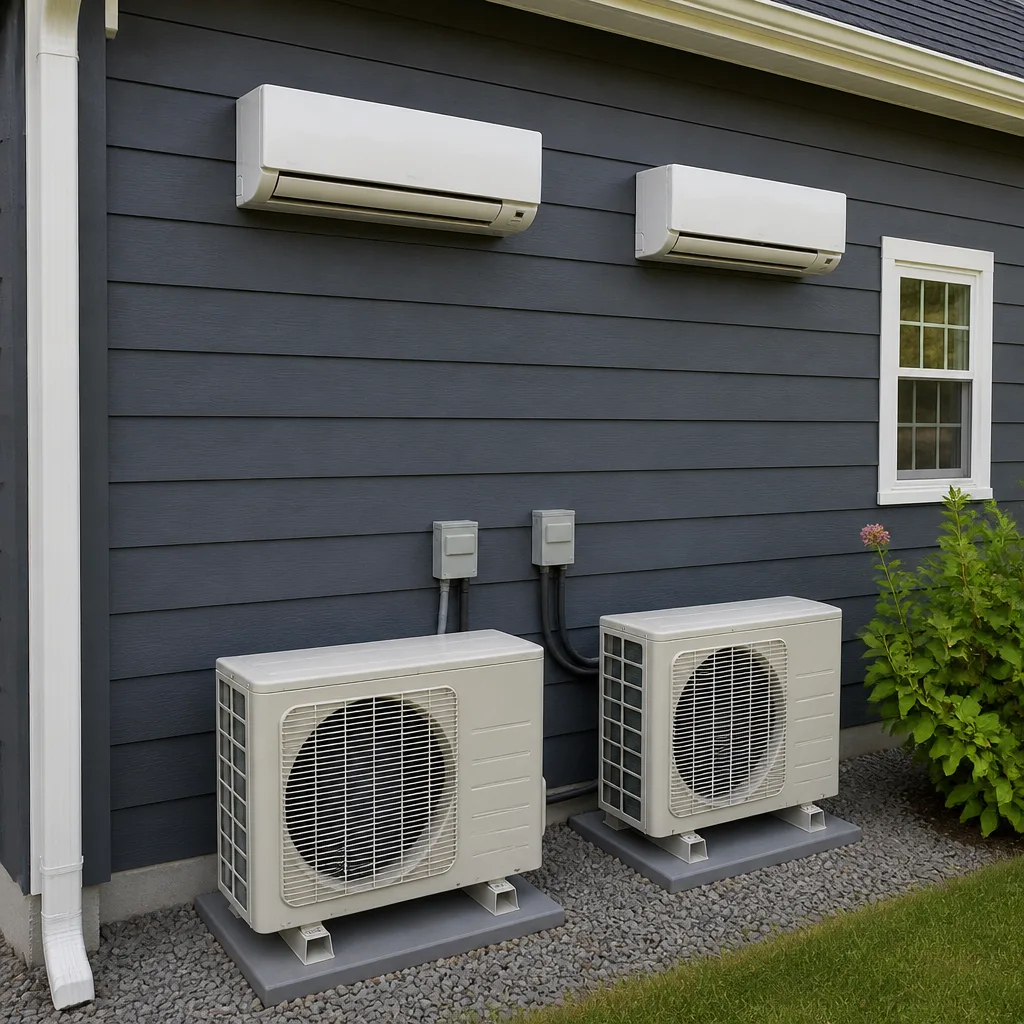 Ductless mini splits
 Carrier
 Trane
 Goodman
Seasonal tune-up and full diagnostic on your Carrier, Trane, or Goodman system - readings shown to you before any repair is proposed
Diagnosis first, numbers second - you approve the repair price before a single part goes in.
Get your free estimateHVAC Emergency Preparedness Guide for El Monte Homes
The counterintuitive truth about HVAC emergencies in El Monte is that they’re predictable. The calls don’t come in a random trickle through the year. They arrive in two narrow windows: the first serious heat wave of summer, when indoor temperatures start climbing past the point where fans help, and the first cold snap of winter, when a furnace that sat idle since spring refuses to light. During those windows, every contractor in the San Gabriel Valley is already booked, and the household that has no plan is the household that waits. The problem was never the broken machine. It was the absence of a framework. This guide gives you one: how to stabilize a failing house, how to triage before you call, what to tell a dispatcher, how to build a service relationship before you need it, and how to handle the two genuinely dangerous emergencies that are not about comfort at all.
Quick Answer
An HVAC emergency in El Monte is any failure that threatens health or property: no cooling during a heat event, no heat during a cold snap, a carbon monoxide alarm, a refrigerant smell, or water pouring from equipment. Preparedness means having three things ready before that happens: a working alternate cooling or warming strategy, a short triage checklist, and an existing service relationship with a multi-brand contractor. Call (833) 943-2930 when one develops. We answer 24/7, with fast dispatch from 7am to 7pm.
Styles & brands we work with
- AC repair
- Furnace & heating
- Heat pumps
- Ductless mini splits
- Carrier
- Trane
- Goodman
Table of Contents
- Why El Monte HVAC Emergencies Cluster Into Two Windows
- How to Stabilize Indoor Temperature While You Wait
- The Triage Checklist to Run Before You Call
- What to Tell a Dispatcher So You Get Prioritized Correctly
- Building a Service Relationship Before You Need It
- Carbon Monoxide and Refrigerant Leak Protocols
- How El Monte’s Housing Stock Changes the Emergency
- The Aging-System Decision You Should Make Before Failure
Why El Monte HVAC Emergencies Cluster Into Two Windows
Demand for air conditioning in El Monte does not rise gently. It spikes, and it spikes with weather. When a sustained high-pressure ridge settles over the San Gabriel Valley, homes that have run their AC lightly for months suddenly ask it to hold a house for days on end. That’s when capacitors fail, compressors overheat, and refrigerant pressure goes out of spec. The same pattern repeats in reverse the first cold week of winter, when a furnace that ran without issue last February won’t ignite this December.
The squeeze isn’t just weather. It’s supply. Every HVAC contractor serving the San Gabriel Valley is fielding calls from the same towns at the same moment – El Monte, Rosemead, South El Monte, Baldwin Park, Whittier. During a peak event, the shops that are already running full are running fuller. Households without an existing relationship are the last to get scheduled, because they’re unknown. Nobody is punishing them. It’s simply that repeat customers call a line where the dispatcher already has an address, a system profile, and a service history.
Here’s what that means practically for an El Monte homeowner:
- Peak heat events (July through September): cooling failures come in waves. Expect the first two or three days of any heat spike to be the hardest to book.
- First cold snap (December into January): furnace failures rush in all at once. A furnace that sat from March to November has had nine months to develop a problem unnoticed.
- The shoulder months are the golden window: the right time to inspect equipment, replace an aging unit, and get on a dispatcher’s radar is when nobody else is calling – spring for the AC, late fall for the furnace.
Preparedness, then, is not about buying a generator or memorizing model numbers. It’s about moving your decisions earlier than the crowd. When we say we’re familiar with equipment from Carrier, Trane, Lennox and Goodman among others, that matters most in a crunch: a technician who knows the make and the likely failure points doesn’t waste the first half hour learning the machine. See AC Repair El Monte for what our team covers.
How to Stabilize Indoor Temperature While You Wait
When the AC dies in a heat event, indoor temperature in a typical El Monte single-story home can climb fast – often several degrees an hour during the hottest part of the afternoon. Until a technician arrives, your job is to slow that climb using everything in the house that isn’t HVAC. The goal isn’t comfort. It’s buying hours at a survivable temperature.
Work through these moves in order:
- Close every window and pull every blind. This sounds backwards – it isn’t. During the day, an open window lets hot outside air in. Shaded, closed-up rooms hold heat out. The moment the outdoor air drops below the indoor temperature (usually after sunset), open opposing windows on the shaded side of the house and use box fans to pull cool night air through.
- Consolidate people and activity into one room. A bedroom with closed drapes and one box fan is easier to keep tolerable than a whole house. Move everyone there during the peak afternoon hours, and move cooking outside or to foods that don’t need the stove.
- Wet the air, not the room. A damp towel across the back of a running box fan drops perceived temperature without raising humidity in the room significantly. A cool shower or damp cloth on the neck and wrists does more for a person than a fan alone once temperatures get high.
- Use the coolest resource in the house deliberately. A garage floor, an interior bathroom, or a north-facing room will all run cooler than a west-facing kitchen in afternoon sun. If you have a below-grade or shaded space, use it during the peak.
- Ration appliance heat. Dryers, ovens, dishwashers, and older incandescent lighting all pump heat into a house that’s already struggling. Skip them until evening.
- Switch off the thermostat entirely if the system is failing. A thermostat calling for cooling on a machine that can’t deliver it can cycle a failing compressor repeatedly and worsen the failure. Leave it off until a technician has looked at it.
For no-heat emergencies in the winter, the same logic inverts: consolidate into one room, seal off unused spaces with closed doors, use layered clothing and blankets, and never introduce a fuel-burning space heater or an outdoor grill into an enclosed room. Carbon monoxide risk in a closed-up El Monte home is real and silent. See the protocols section below.
The Triage Checklist to Run Before You Call
A meaningful share of calls that come in as “emergencies” resolve before a technician arrives, and running through a short checklist first is how you find out whether yours is one of them. It’s also how you avoid paying for a visit that a two-minute fix would have prevented. Run through this before you pick up the phone.
- Check the thermostat. Confirm it’s set to COOL (or HEAT, in winter), the fan is on AUTO or ON, and the setpoint is at least three degrees below (or above, for heat) current room temperature. A thermostat switched to the wrong mode is the single most common false alarm.
- Check the breaker. Locate the breaker panel. If the AC or furnace breaker is tripped, reset it once. If it trips again, stop – do not reset it twice. That’s a genuine electrical fault and needs a technician.
- Check the air filter. A filter that’s fully clogged with dust can restrict airflow enough to shut down a system on a safety switch. If it’s matted, replace it with a clean one and give the system fifteen minutes.
- Check the condensate drain (cooling only). Many systems have a float switch that shuts off cooling when the drain pan fills. If you can see standing water near the indoor unit, that’s likely the culprit – leave it shut off and call.
- Check the outdoor unit (cooling only). Confirm the outdoor unit has power at its disconnect, is not buried in debris, and that nothing is blocking airflow around it. If the fan blade isn’t turning while the indoor unit runs, that’s a real failure.
- Check the furnace gas valve and pilot or igniter (heating only). If you smell gas at any point during this check, stop immediately and follow the carbon monoxide protocol below.
If all six checks come back clean and the system is still not working, it’s a real call. If any one of them reveals an obvious fix, you’ve saved yourself a visit. Do not open panels, touch wiring, or attempt to diagnose refrigerant or gas components yourself – those are jobs for a trained technician, and we mean that plainly.
What to Tell a Dispatcher So You Get Prioritized Correctly
During a peak demand window, every dispatcher working El Monte is fielding more calls than can be scheduled on the same day. Prioritization is happening whether or not anyone tells you. The households that get scheduled fastest are the ones that give a dispatcher the information to justify a priority slot. Here’s what to have ready before you call.
- The problem in plain language. “The AC is running but blowing warm air” is more useful than “my AC is broken.” “The furnace starts and shuts off after a minute” is more useful than “the heat isn’t working.”
- The age and brand of the equipment. A fifteen-year-old unit versus a five-year-old unit points to a different diagnosis. The brand matters too – a technician familiar with Carrier, Trane, Lennox or Goodman can prepare parts and know the failure pattern before getting to your door.
- The safety situation. Any of the following escalate your call to a genuine emergency: an infant, an elderly resident, or anyone with a medical condition in the home; indoor temperatures above 90°F (or below 55°F in winter); a carbon monoxide alarm; a refrigerant smell; water actively leaking from the equipment.
- What you’ve already checked. A caller who has confirmed the thermostat, breaker, and filter has either found the fix or narrowed the problem. Either outcome saves dispatch time.
- Whether you have an existing service history. If a dispatcher can see your address and system on file, the call is faster. If not, be ready to give your address, the type of system, and the brand from the outset.
- Your availability. Be clear about when someone can be home to meet a technician.
Call (833) 943-2930. We answer 24/7, and dispatch runs from 7am to 7pm Sunday through Friday. A call outside dispatch hours is booked into the next opening. When a technician arrives, having a short summary like the one above also shortens the diagnostic, because the tech starts at your end of the problem instead of the beginning.
Building a Service Relationship Before You Need It
A service relationship sounds abstract until an emergency hits, and then it’s the difference between a scheduled visit and an unanswered callback. In practical terms, it means a contractor has already been in your home, seen your equipment, and can pull up your address when you call in the middle of a heat wave. Building one takes almost no effort, but it needs to happen in the off-season.
What that relationship looks like with a multi-brand contractor:
- One call for both heating and cooling. When your system has both an AC and a furnace, having one point of contact means you don’t juggle two service histories. For an El Monte homeowner, that’s a real convenience when the first cold snap and a failing furnace collide.
- Familiarity with your specific equipment. Our technicians are certified to work on equipment from nine major brands, including Carrier, Trane, Lennox, Goodman, Rheem, York, Daikin, Bryant and American Standard. That’s not a marketing line – it’s what lets a technician walk in and know the machine.
- Brand-agnostic recommendations. A single-brand dealer will steer you toward their brand, sometimes in situations where a different brand is a better fit for your home and budget. A brand-agnostic contractor recommends based on the home, not the inventory.
- Right-sized replacement rather than a patch. When a system does fail, the question becomes whether to replace. A contractor who handles full furnace replacement and full AC installation can plan a right-sized replacement properly, which means a load calculation tied to your actual square footage, insulation, and window layout – not just a like-for-like box swap.
Setting that relationship up is simple. Have a technician out to your home in a shoulder season – spring for cooling, late fall for heating – and let them look at your equipment before a problem forces the call. Our technicians have up to 15 years of experience, which means the walkthrough isn’t a sales visit. It’s an inspection. When the emergency does arrive, the difference is that we already know your house on the other end of the line.
Carbon Monoxide and Refrigerant Leak Protocols
Two HVAC emergencies are not about comfort. They’re about safety, and the protocol for each is different from a normal service call. Both deserve a spot on the refrigerator door in every El Monte home.
Carbon monoxide
A carbon monoxide alarm is a health emergency and should be treated as one – not as an HVAC service call. The order matters:
- Get everyone out of the house immediately. Do not stop to open windows first. Do not investigate. Move people, including pets, to fresh air outside.
- Call 911 from outside the home. The fire department has monitoring equipment that will confirm the level and clear the house.
- Do not re-enter until the fire department says it’s safe.
- Do not run the furnace again until it’s been inspected by a trained technician. A heat exchanger crack, a blocked flue, or a backdrafting vent is a job for a professional, and it’s not something to diagnose yourself.
Carbon monoxide is invisible and odorless, which is exactly why an alarm is the first sign, not a smell. Every El Monte home with any gas-burning appliance, furnace included, should have a working CO alarm on each floor and outside sleeping areas. If yours is more than a few years old, replace it without waiting to research it.
Refrigerant leaks
Refrigerant leaks are less immediately dangerous than CO, but they can still cause health symptoms and they always indicate a system problem. If you smell a sweet, chemical odor near the indoor or outdoor unit, or if you notice hissing near the lines:
- Turn off the system at the thermostat. Leave it off.
- Open windows and doors and step outside if you feel lightheaded, short of breath, or notice irritation in the eyes or throat. Call 911 if symptoms are severe.
- Do not attempt to find the leak yourself. Refrigerant is handled under specific regulation and requires trained technicians with the right equipment.
- Call us at (833) 943-2930. We answer 24/7 and will book the next available dispatch.
Refrigerant handling is one of the reasons a brand-agnostic HVAC specialist exists. A technician trained on your specific make – Carrier, Trane, Lennox or Goodman, for example – knows where that manufacturer tends to see leaks and what parts to expect, so the diagnosis is faster and the repair is correct the first time.
How El Monte’s Housing Stock Changes the Emergency
Not every house fails the same way. In El Monte, the two most common home categories – older single-story homes from the mid-century decades, and newer or recently renovated homes – each bring their own emergency patterns.
In older single-story homes, the furnace and AC are often original or one-generation replacements. Duct systems in these homes typically run through attics and crawlspaces, and are frequently leaky, undersized, or unsealed at the joints. That means a system that “worked last summer” may have been operating under airflow stress for years and finally gave out. The same homes often have single-pane windows and minimal insulation, which magnifies the health risk during an extended heat event: indoor temperatures climb faster, and the first day or two before a technician arrives matter more.
Newer homes and renovations create a different set of problems. Tighter envelopes and better-sealed windows mean less natural airflow, which is good for efficiency but bad for a failing system: heat builds up faster with no leakage to slow it, and a refrigeration or combustion problem concentrates. Whole-home ventilation in a tightly built El Monte home is worth thinking about in the same conversation as HVAC.
The practical implication: when you call in an emergency, the dispatcher needs to know the house type along with the system type. A 1950s-era single-story with attic ducts and a 15-year-old Carrier has a different diagnostic path than a 2015 build with a modern Trane system and tight duct design. Both are jobs we do. Both are prepared for faster when the caller describes the house accurately.
The Aging-System Decision You Should Make Before Failure
The most expensive HVAC emergency is the one that forces a decision under pressure. When a 16-year-old furnace dies on the coldest night of the year, you don’t have time to compare repair and replace properly. You choose the fastest option, and it’s often not the right one. The fix is to make that decision in a shoulder season.
The repair-or-replace question comes down to a few practical factors:
- Age of the unit. A system in its late teens or older is on borrowed time. A single repair might cost less than a new unit, but if the same system needs another repair six months later, the math changes.
- Repair frequency. Two or more repairs in a season is a signal. Three is a pattern. The next failure is the one to plan for rather than react to.
- Efficiency gap. Older systems run at lower efficiency, and if yours is significantly behind what a current unit would deliver, the energy savings of a right-sized replacement can offset part of the cost over its service life. That’s not a guarantee, but it’s part of the comparison.
- The size of the system. A unit that was undersized for the home, or that was over-installed to compensate, is a candidate for correct replacement. That’s what we mean by right-sized – a load calculation tied to the house, not a box swap.
We handle both aspects of the decision. A furnace repair is a real option if the system has years of service left. A full furnace replacement is the right call if it doesn’t. The same for cooling: an AC that can be repaired is repaired, and an AC that needs replacing is replaced with a right-sized unit. Making that decision early, in spring or fall, means no emergency surcharge and no scramble – and it lets us order the right equipment without delay.
Common Mistakes to Avoid
- Resetting a tripped breaker more than once. One reset is a check. A second reset on the same breaker is a warning sign you’re overriding a safety device. If it trips twice, get a technician.
- Turning the AC back on to “see if it works” after it cut out. Repeated cycling on a failing compressor or a blocked condensate switch makes the underlying problem worse and can turn a modest repair into a full replacement. Leave it off.
- Assuming a warm-air AC problem is just a refrigerant issue. Plenty of “no cooling” calls in El Monte turn out to be airflow, filter, or thermostat problems. Refrigerant is one of many causes, and guessing often leads to the wrong diagnosis.
- Running a fuel-burning space heater or outdoor grill indoors during a no-heat emergency. This is a carbon monoxide emergency waiting to happen. If you can’t heat the house with the furnace, dress warm, consolidate into one room, and call for a technician. Do not introduce combustion into a closed space.
- Waiting until the first heat wave to schedule a check-up. The shoulder season is when a technician has time to inspect. Scheduling in peak demand means slower appointments and stress-tested equipment that’s had nine months of run-time to develop an unnoticed issue.
- Buying a replacement from whoever answers the phone fastest. A brand-agnostic contractor matches the equipment to the home and your budget. A single-brand dealer or a volume shop may be matching it to what they have on hand. A right-sized replacement takes a load calculation, not a mental calculation.
- Ignoring the smell of refrigerant because “it’s probably nothing.” Refrigerant leaks worsen over time, degrade efficiency, and can cause health issues. One service call now is cheaper than an extended leak and a compressor failure later.
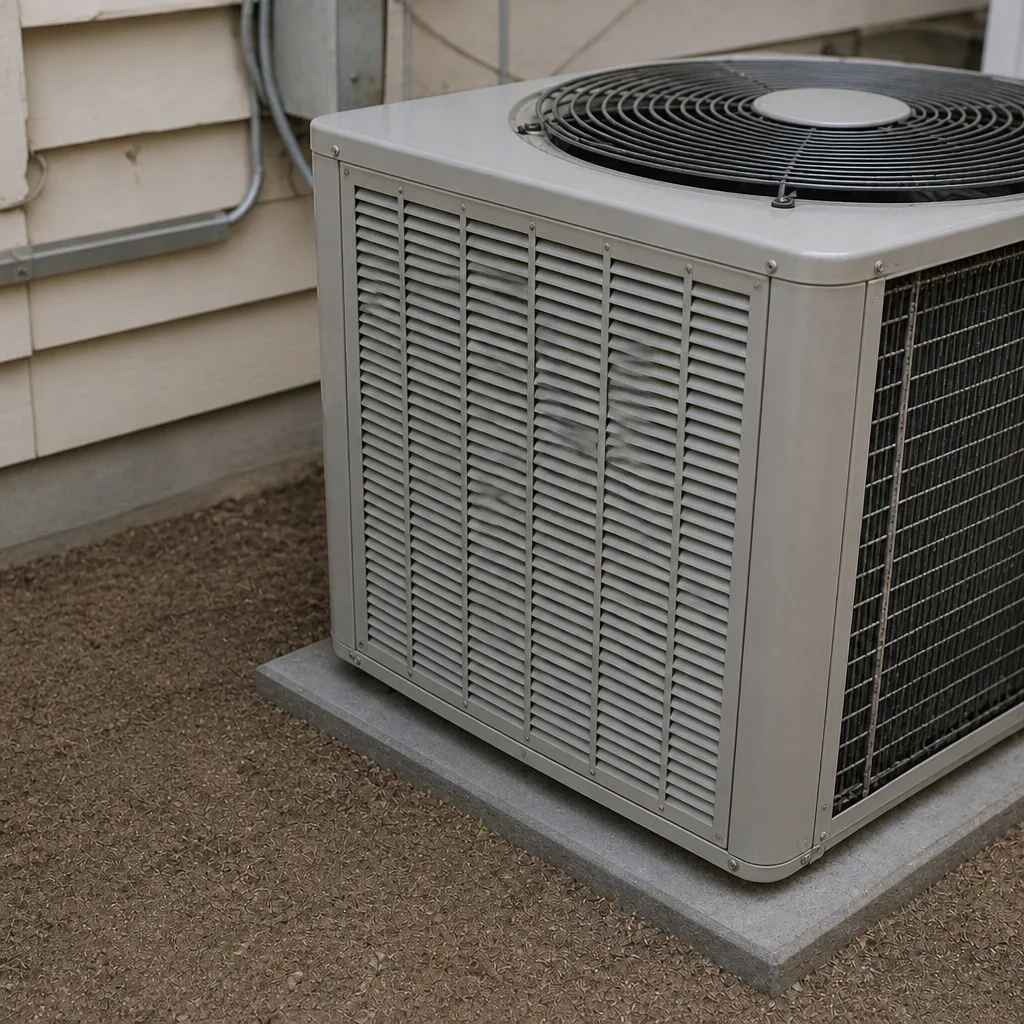
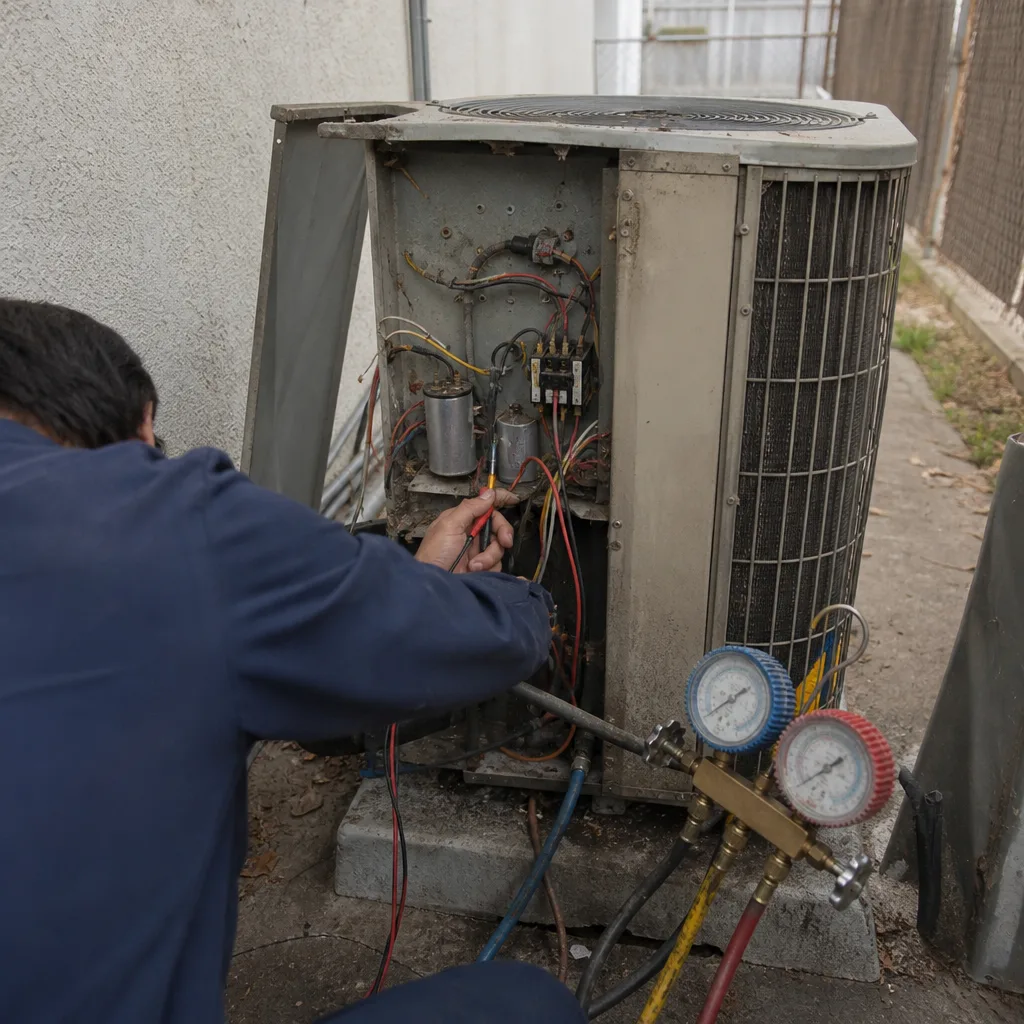
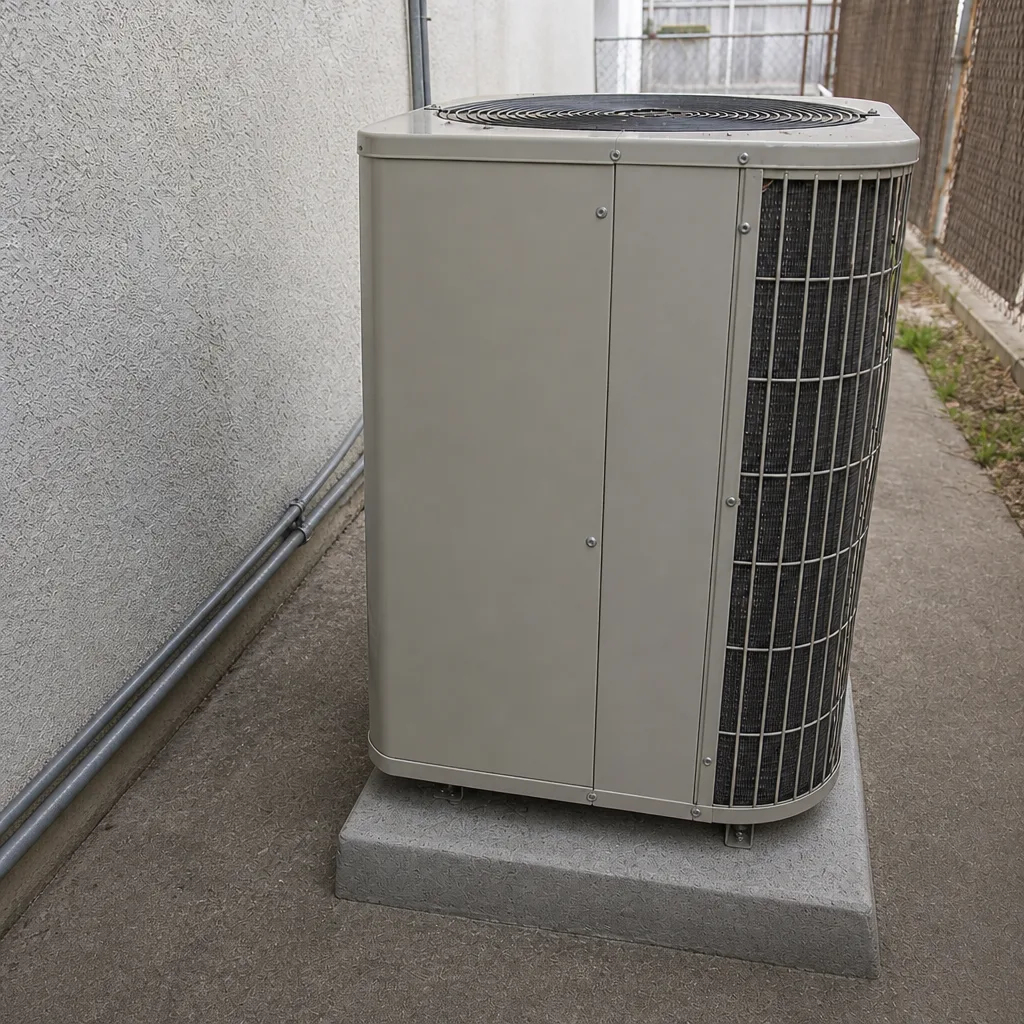
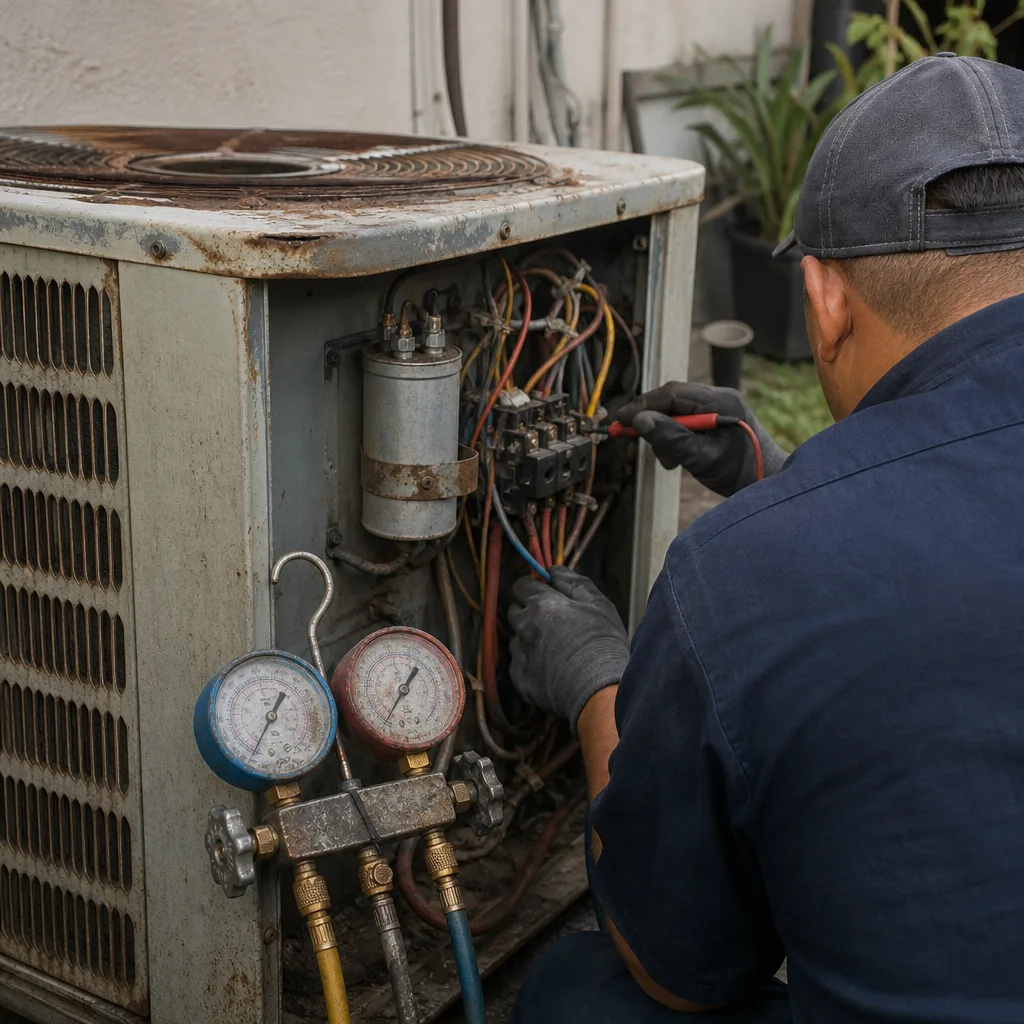
See the difference
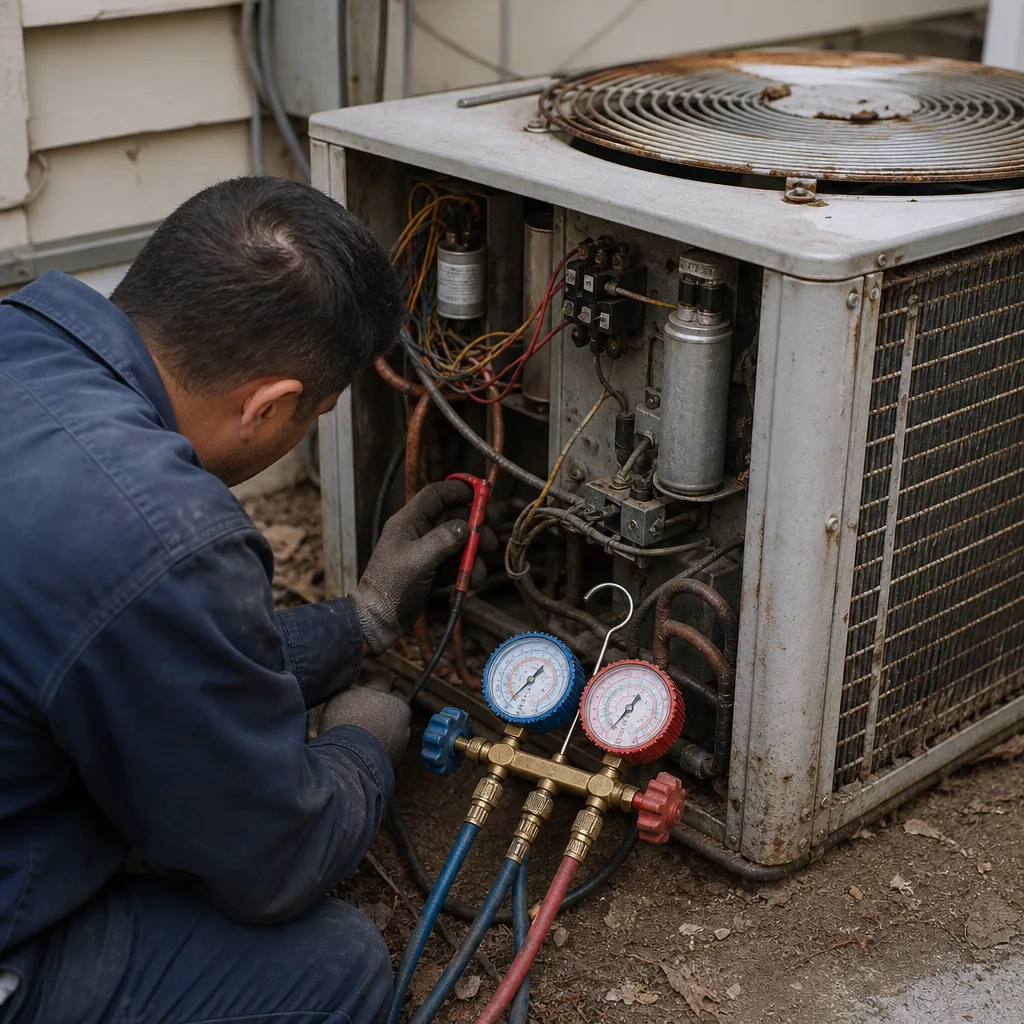 Before
 After
 Before
 After
 Before
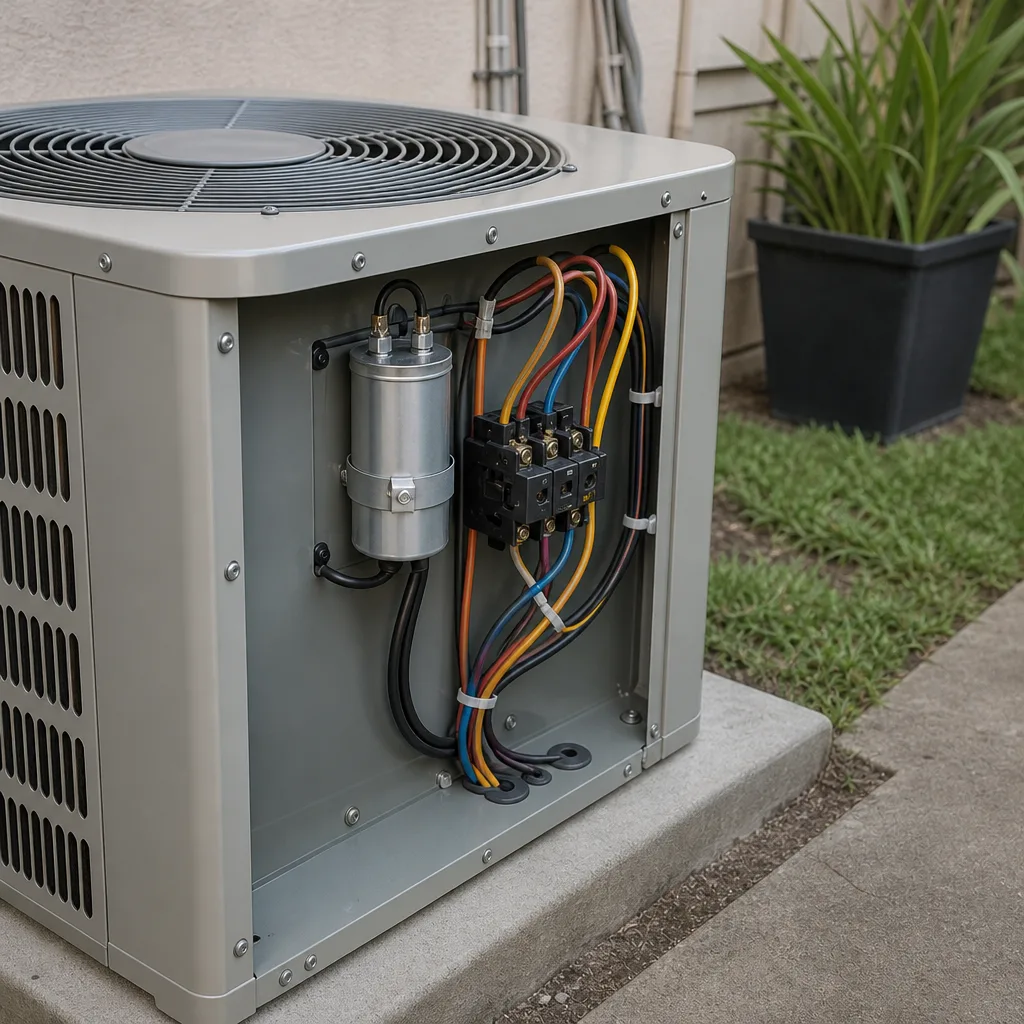 After
When to Call a Professional
Some failures need a technician. Others need 911. The line is clearer than it might seem. Call 911 immediately if a carbon monoxide alarm sounds, if anyone in the home has severe symptoms that could be CO or refrigerant related, or if you smell gas. Those are not HVAC service calls – they’re emergency medical and fire calls. Call us for a technician at (833) 943-2930 if the AC is running but not cooling, if the furnace starts and shuts off repeatedly, if you smell refrigerant, if water is leaking from the indoor unit, if a breaker trips twice, or if indoor temperatures in a home with an infant, elderly resident, or medical condition have climbed into unsafe territory and the system won’t keep up. AC Repair El Monte offers free estimates in El Monte – call (833) 943-2930. We answer 24/7, with fast dispatch from 7am to 7pm.
Frequently Asked Questions
Same-day service depends on the day and how much volume is already booked, and during the first two or three days of a heat spike, availability tightens for every contractor in the San Gabriel Valley. The households that get scheduled fastest during peak demand are the ones with a prior service relationship and a clear description of the problem. Call (833) 943-2930 early in the day when possible – we answer 24/7, with fast dispatch from 7am to 7pm, Sunday through Friday. Estimates are free.
Yes, and the pattern is the same one homeowners learn to expect during summer heat. El Monte winters are mild, but the first cold snap still catches furnace systems that sat idle since spring, and furnace failures rush in all at once in December and January. Preparing a furnace in late fall, before the cold arrives, is the equivalent of having the AC checked in spring. Call (833) 943-2930 to schedule the inspection before the first cold snap – the estimate is free.
Same-day furnace repair depends on availability on the day, and during the first cold snap it becomes competitive. The fastest priority goes to households with safety-relevant conditions – an infant, elderly resident, or medical need – and to callers who can describe the equipment type, brand, and behavior clearly. Call (833) 943-2930 as soon as the furnace starts misbehaving. We answer 24/7, with fast dispatch from 7am to 7pm, Sunday through Friday.
Age alone isn’t the deciding factor – age combined with repair frequency is. A system in the late teens or older that’s already needed two or more repairs is more likely to fail again soon, and planning a right-sized replacement in a shoulder season is usually the better call than waiting for a failure. For a system with years of service left, a furnace repair or AC repair is often the right move. We’ll walk through both options with you – call (833) 943-2930 and the estimate is free.
Turn the system off at the thermostat, open windows, step outside if you feel any symptoms, and call us at (833) 943-2930. Do not attempt to locate the leak yourself – refrigerant handling requires trained technicians and the right equipment. If symptoms are severe, call 911 first. We answer 24/7 and will book the next dispatch.
A brand-agnostic contractor recommends based on your equipment and home, not on a single manufacturer partnership. Our technicians are certified to work on equipment from nine major brands, including Carrier, Trane, Lennox, Goodman, Rheem, York, Daikin, Bryant and American Standard. In an emergency, that means no wasted diagnostic time on unfamiliar equipment, and when replacement is the right call, the recommendation follows your house – not a preferred-vendor list. Call (833) 943-2930 for a free estimate.
The Bottom Line
HVAC emergencies in El Monte come in predictable waves, and the household that prepares in a shoulder season gets through them far better than the one that doesn’t. Stabilize first: close up, consolidate, and use every non-HVAC resource you have. Triage before you call: thermostat, breaker, filter, drain, and outdoor unit – a short checklist resolves a share of emergencies without a technician. When you do call, give the dispatcher the details that help prioritize. And build the service relationship before you need it, with a contractor who knows your equipment brand and handles both heating and cooling under one call. For a closer look at the neighborhood coverage and specifics, visit El Monte on our site, and call (833) 943-2930 for a free estimate. We answer 24/7, with fast dispatch from 7am to 7pm.
Written by the team at AC Repair El Monte.